
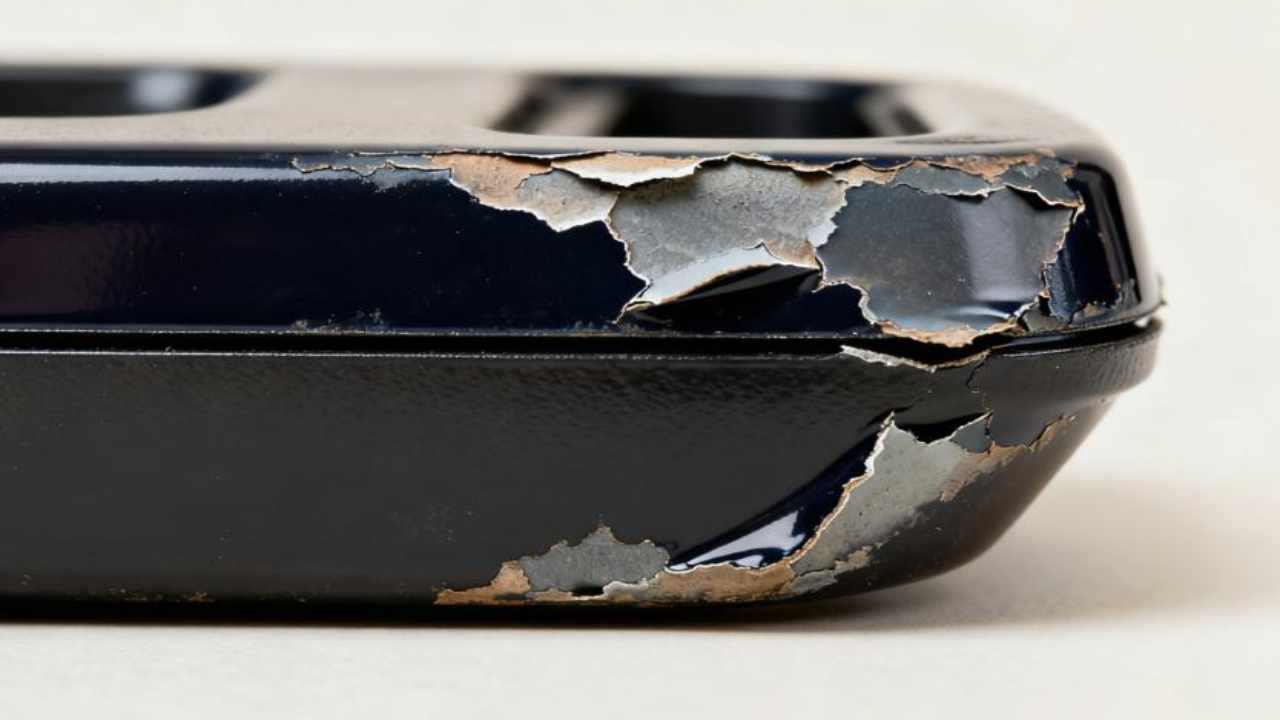
A coating can exhibit excellent appearance, complete substrate coverage and satisfactory initial adhesion yet begin peeling after humidity exposure, thermal cycling or routine mechanical stress. These failures frequently trigger investigations into resin chemistry, curing conditions or surface preparation, but the underlying problem may be less obvious than any single formulation defect.
Coating adhesion develops through interactions between the liquid formulation, substrate surface and solidifying polymer film. The resulting interface must accommodate changes in temperature, moisture content, mechanical loading and internal coating stress throughout its service life.
Even apparently clean substrates may contain weak boundary layers, migrated additives or chemically unsuitable surfaces. Meanwhile, formulation components that improve flow and appearance can influence interfacial composition, cure development and long-term adhesion.
Understanding these interactions is particularly important for industrial coatings applied to metals, plastics and composite substrates, where manufacturing variability can produce unexpected differences in performance.
1. Good Wetting Does Not Automatically Produce Strong Adhesion
Wetting is essential for establishing intimate contact between a coating and its substrate, but it represents only one stage in adhesion development.
A liquid coating must spread sufficiently to displace air and establish contact with the surface. This behavior depends on liquid surface tension, substrate surface free energy, formulation rheology and the actual chemical condition of the interface.
Contact-angle measurements provide a practical means of assessing wettability. Lower contact angles generally indicate more favorable spreading for the particular liquid–surface combination being measured.
ASTM D7334 addresses the measurement of advancing contact angles for coatings, substrates and pigments. However, a favorable contact angle does not directly establish adhesive strength or long-term durability.
A coating may wet a polymer substrate effectively while forming relatively weak molecular interactions with it. Conversely, compatible functional groups, chemical bonding or appropriate interfacial interactions may contribute to stronger adhesion even where initial wetting behavior is not ideal.
Formulators should also distinguish the properties of standardized test liquids from those of the actual coating formulation. Solvents, surfactants and other components may modify wetting during application, while evaporation or curing subsequently changes the interfacial composition.
Contact-angle measurements are therefore useful screening tools, but reliable adhesion requires additional evidence.
2. Surface Preparation Can Leave Problems That Are Difficult to See
Surface preparation is frequently associated with cleaning and roughness development. Both matter, but neither guarantees that a substrate is chemically suitable for coating.
On steel, abrasive blasting removes corrosion products and creates a surface profile that can contribute to mechanical interlocking. However, the resulting profile must be appropriate for the coating thickness and formulation.
Excessive or poorly controlled roughness may leave insufficient coating coverage over surface peaks, increasing the risk of local defects and premature corrosion.
Soluble salts are another concern. Chlorides and other ionic contaminants can remain after apparently satisfactory preparation and contribute to moisture-related coating failure.
ISO 8502-6 describes the Bresle method for extracting water-soluble contaminants from prepared surfaces. ASTM D4417 addresses methods for measuring the surface profile of blast-cleaned steel.
These methods examine different aspects of substrate condition and should not be treated as substitutes for one another.
Surface contamination can also originate from cleaning agents, compressed-air systems, handling practices or abrasive media.
A robust surface-preparation specification should therefore address cleanliness, contamination, surface profile, treatment consistency and the permitted interval before coating application.
3. Plastic Substrates Introduce Additional Adhesion Variables
Polypropylene, polyethylene and other low-surface-energy plastics present particular challenges because conventional coating formulations may exhibit limited wetting or interfacial bonding.
Surface activation methods such as plasma, corona and flame treatment can improve adhesion by modifying surface chemistry and introducing polar functional groups.
However, treatment effectiveness depends on substrate composition, process parameters and subsequent handling.
Mold-release agents, processing lubricants, stabilizers and other additives may be present at the molded surface or migrate toward it during storage and thermal exposure. These materials can establish weak boundary layers that interfere with coating adhesion.
The composition of the plastic itself may also vary between suppliers, grades or production batches. Even nominally identical parts can exhibit different surface characteristics because of molding temperature, cooling conditions or recycled-material content.
Research comparing polypropylene pretreatment techniques has investigated how cleaning, mechanical modification, plasma treatment, corona treatment and primers influence surface characteristics and bonding behavior.
Another complication is treatment aging. Surface activation may not remain equally effective indefinitely because molecular rearrangement, contamination or migration can change the modified surface.
For OEM automotive and industrial plastic components, controlling the period between surface treatment and coating application can therefore be as important as selecting the treatment technology.
4. Adhesion Promoters Must Be Compatible With Both Sides of the Interface
Adhesion promoters are often introduced when changing the primary coating binder or improving surface preparation fails to provide adequate adhesion.
Their effectiveness depends on interactions with both the substrate and the coating matrix.
Silane coupling agents, for example, may provide useful interfacial interactions with appropriate inorganic surfaces through hydrolyzable silane functionality, while their organofunctional groups interact with compatible coating chemistries.
Nevertheless, silane performance depends on substrate chemistry, hydrolysis conditions, condensation reactions, concentration and application method.
Chlorinated polyolefin-based adhesion promoters are another established option for certain low-surface-energy plastic substrates, including polypropylene-containing materials.
These promoters may be incorporated into compatible coating systems or applied as primers, depending on the specific technology and application.
However, increasing promoter concentration does not necessarily produce continuously improving adhesion. Excessive or incompatible interfacial additives may influence film properties, moisture resistance or coating cohesion.
Surfactants, flow modifiers and other low-surface-energy components can also redistribute during film formation, potentially affecting adhesion at the substrate interface or between coating layers.
Selecting an adhesion promoter therefore requires consideration of interfacial chemistry, formulation compatibility, application conditions and performance after environmental conditioning.
5. Cure Development Can Generate Stresses That Challenge Adhesion
Adhesion failure is not always caused by insufficient bonding at the initial interface.
Internal stresses develop as coatings dry, crosslink and respond to environmental changes. Depending on their magnitude and distribution, these stresses may contribute to cracking, delamination or failure within the coating itself.
Solvent or water evaporation reduces film volume during drying. Chemical curing may introduce additional shrinkage, particularly in highly crosslinked thermosetting systems.
The substrate restricts some of these dimensional changes, causing stress to accumulate within the coating.
Film thickness, binder modulus, glass-transition temperature and crosslink density all influence how effectively the coating accommodates deformation.
Temperature changes introduce another source of stress. When the coating and substrate have different coefficients of thermal expansion, heating and cooling may generate repeated interfacial loading.
A rigid coating on a flexible plastic component can be especially sensitive to mechanical deformation and thermal cycling.
Published studies of epoxy coatings demonstrate the importance of residual stresses and their relationship with thermal aging and coating failure modes.
Consequently, increasing crosslink density to improve chemical resistance or hardness may introduce competing requirements for flexibility and interfacial durability.
Formulation optimization must consider the complete combination of adhesive strength, cohesive properties and stress development.
6. Humidity Exposure Can Reveal Weaknesses That Initial Tests Miss
Water exposure can fundamentally change the behavior of a coating–substrate interface.
Moisture may penetrate the coating through diffusion, defects or other transport pathways. Its effects depend on the polymer chemistry, coating structure, substrate condition and exposure environment.
In certain polymer systems, water acts as a plasticizer, altering mechanical properties and increasing swelling. Susceptible chemical bonds may also undergo hydrolytic degradation under relevant conditions.
When moisture reaches an interface containing soluble contaminants, localized osmotic effects may contribute to blistering or loss of adhesion.
For metallic substrates, corrosion reactions and underfilm degradation can create additional driving forces for delamination.
Temperature cycling can intensify these effects by repeatedly changing coating dimensions, moisture transport and stress distribution.
A comprehensive scientific review of water-induced polymer-coating failure identifies swelling, plasticization, hydrolysis, corrosion and interfacial degradation as important mechanisms.
This explains why excellent initial adhesion results cannot automatically establish performance in humid environments.
Environmental qualification should reflect realistic service conditions rather than relying exclusively on dry, room-temperature measurements.
7. Adhesion Testing Must Reveal the Failure Mechanism
Adhesion tests provide valuable comparative information, but their results depend on the method, substrate, film thickness and conditioning procedure.
ASTM D3359 and ISO 2409 describe coating assessment using tape or cross-cut methods. These methods help evaluate resistance to coating removal under defined test conditions, but the resulting ratings should not be interpreted as universal measurements of interfacial bond strength.
Pull-off methods, including ASTM D4541 and ISO 4624, measure the force or stress required to cause failure in a defined test arrangement.
The measured result may reflect coating–substrate adhesion, intercoat adhesion, cohesive strength of the coating or failure of the test adhesive or substrate.
Consequently, reporting the numerical result without examining the failure location can lead to incorrect formulation decisions.
Observed behavior | Factors worth investigating |
|---|---|
Coating separates cleanly from the substrate | Contamination, wetting, surface chemistry and pretreatment |
Failure occurs between coating layers | Intercoat compatibility, contamination and recoat interval |
Coating fractures internally | Cohesive strength, crosslinking and internal stress |
Adhesion decreases after humidity exposure | Moisture transport, swelling, soluble salts and interfacial degradation |
Results vary between plastic batches | Additive migration, molding history and surface-treatment consistency |
Testing protocols should include representative production substrates, controlled application conditions, defined curing periods and appropriate environmental conditioning.
Comparisons should use consistent test geometry and failure-mode classification. A change from adhesive failure to cohesive failure can indicate an improvement in interfacial bonding even when the measured pull-off value changes relatively little.
For development teams, the most useful result is not simply the highest adhesion rating. It is an explanation of why the coating remains attached, where failure begins and whether the system maintains adequate performance under its intended service conditions.
Achieving that level of understanding requires the coordinated evaluation of substrate preparation, formulation chemistry, adhesion-promoting materials and industrial application practices. These relationships are precisely where systematic coating-adhesion training can help technical teams make more reliable development and troubleshooting decisions.
ONLYTRAININGS | ADVANCED TECHNICAL TRAINING
Coating Adhesion Optimization Training for Superior Results
Strengthen your ability to identify adhesion problems, select suitable surface treatments and make technically defensible formulation decisions.
Key technical areas covered
Understand surface tension, contact angle, capillarity, spreading and their influence on coating–substrate interactions.
Distinguish adhesive failure from cohesive failure and identify important failure mechanisms.
Evaluate adhesion promoters and substrate-treatment techniques for different coating systems.
Address adhesion challenges on plastics and other difficult industrial substrates.
Apply practical troubleshooting approaches to surface preparation, formulation and adhesion defects.
Explore industrial best practices, case studies and expert-led technical discussions.
Training benefits: Six-month access to the complete training, a verifiable certificate, downloadable presentation materials, practical resources and 24/7 expert discussion forum access.
Technical References
ASTM D7334-08(2022). Standard Practice for Surface Wettability of Coatings, Substrates and Pigments by Advancing Contact Angle Measurement. ASTM International
ASTM D3359-23. Standard Test Methods for Rating Adhesion by Tape Test. ASTM International
ISO 2409:2020. Paints and varnishes — Cross-cut test. ISO
ASTM D4541-22. Standard Test Method for Pull-Off Strength of Coatings Using Portable Adhesion Testers. ASTM International
ISO 4624:2023. Paints and varnishes — Pull-off test for adhesion. ISO
ISO 8502-6:2020. Preparation of steel substrates — Extraction of water-soluble contaminants for analysis using the Bresle method. ISO
ASTM D4417-21. Standard Test Methods for Field Measurement of Surface Profile of Blast Cleaned Steel. ASTM International
Surface Roughness Profile and Its Effect on Coating Adhesion and Corrosion Protection — A Review. Progress in Organic Coatings. Research publication
Comparative Analysis of Primers and Alternative Polypropylene Pre-Treatment Techniques. Journal of Adhesion, 2023. Research publication
A Structured Approach to the Determination of Residual Stresses in an Epoxy-Amine Coating and the Influence of Thermal Ageing. Progress in Organic Coatings. Research publication
Water-Induced Failure in Polymer Coatings — Mechanisms, Impacts and Mitigation Strategies. Polymer Degradation and Stability, 2024. Research publication
How to Use Eastman Chlorinated Polyolefins as Adhesion Promoters. Eastman Technical Guide