
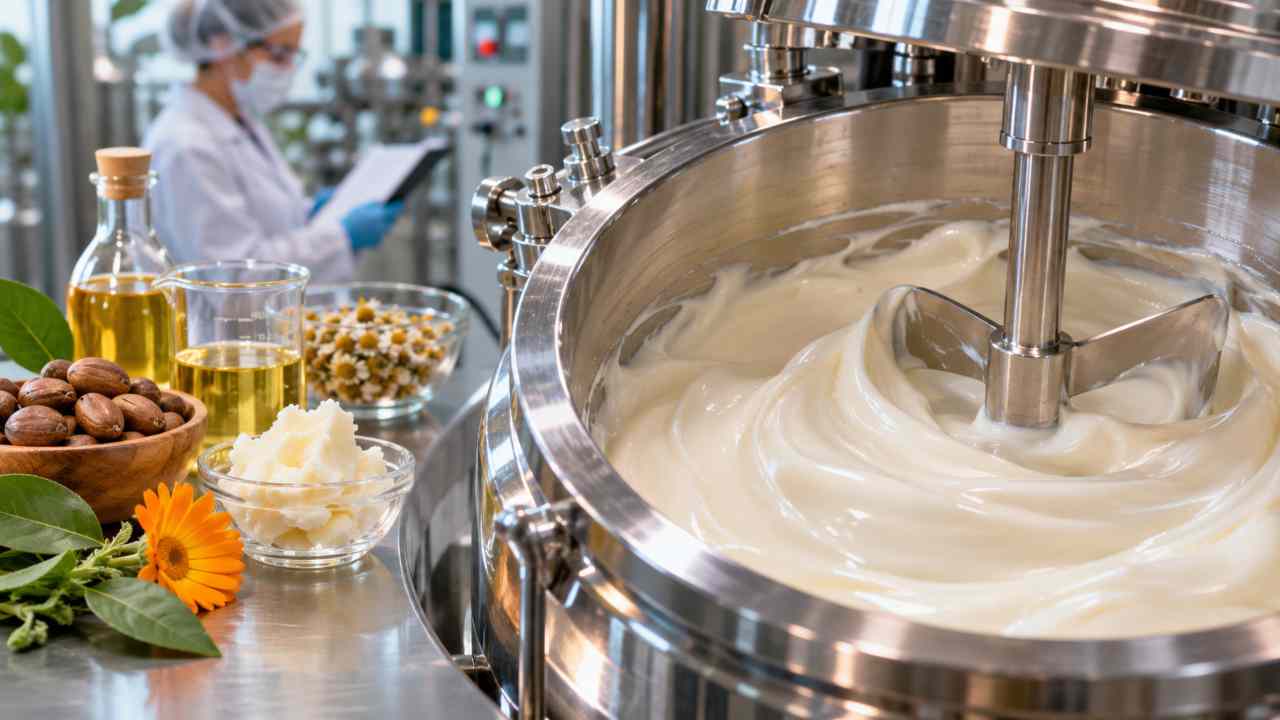
Sustainable cosmetic development has moved beyond replacing petroleum-derived ingredients with botanical alternatives. Formulators are increasingly expected to deliver products with responsible ingredient sourcing, measurable environmental benefits, reliable stability, attractive sensory properties and demonstrable efficacy. Meeting these expectations simultaneously is considerably more complex than achieving a high natural-origin percentage.
A plant-derived emollient may introduce oxidation sensitivity. A biodegradable surfactant may alter foam structure or viscosity. Replacing a conventional emulsifier can affect droplet stability, preservative distribution and product texture. Even reducing the number of ingredients may create performance compromises that require additional processing or packaging protection.
For cosmetic R&D teams, sustainability therefore becomes a question of evaluating the complete product, from raw-material selection and formulation chemistry to manufacturing, consumer use and disposal. The objective is not simply to formulate with more natural ingredients, but to establish whether the resulting product delivers meaningful environmental improvements without sacrificing safety or commercial performance.
1. Natural-Origin Content Is Not the Same as Sustainability
Natural, renewable, biodegradable and sustainable are frequently used together in cosmetic product positioning, although they describe different properties.
Natural-origin classification generally concerns ingredient sources and permitted processing routes. Renewable content describes feedstock origin, while biodegradability concerns degradation under specified environmental conditions. Sustainability considers a broader range of impacts, including sourcing practices, energy consumption, water use, manufacturing efficiency, packaging and product disposal.
ISO 16128 provides technical approaches for defining and calculating natural and organic ingredient indexes. However, these calculations do not establish environmental superiority, product safety or regulatory approval of associated claims.
Consider two emollients delivering comparable sensory performance. One is obtained from agricultural feedstocks and requires extensive purification, while another uses a different production route with lower processing energy requirements. Without comparable environmental data, selecting the first exclusively because it is plant-derived may not represent the better sustainability decision.
For this reason, raw-material evaluation should separate ingredient origin from measurable environmental performance. Natural-origin calculations can contribute useful information, but they should not substitute for environmental assessment.
2. Selecting Sustainable Functional Ingredients Without Performance Loss
Ingredient replacement is particularly challenging when a material performs several functions simultaneously.
Conventional cosmetic ingredients often contribute to spreading, rheology, emulsification, deposition, conditioning or preservation. Replacing one ingredient with a renewable alternative can alter multiple formulation properties, even when both materials belong to the same functional category.
Plant-derived esters, fatty alcohols and triglycerides offer opportunities to modify emollient systems. Their performance nevertheless depends on molecular structure, fatty-acid distribution, polarity, melting characteristics and compatibility with the remaining ingredients.
For example, substituting a volatile sensory modifier with a heavier plant-derived ester may increase residual skin feel and reduce perceived absorption speed. Similarly, changing the hydrophobic portion of an emulsifier system can alter interfacial behavior, droplet size and long-term emulsion stability.
Botanical active ingredients present additional quality challenges because agricultural conditions, extraction methods and storage history can influence their composition. Relevant specifications may include marker-compound concentration, residual solvents, moisture, pesticide residues, microbial quality and oxidation indicators.
Upcycled cosmetic ingredients also require appropriate characterization. Recovering valuable compounds from agricultural by-products does not automatically guarantee consistent purity, traceability or sustainability.
A technically defensible selection process compares functional performance, composition, supplier documentation, batch consistency, processing requirements and environmental evidence before approving a replacement.
3. Designing Stable Natural Emulsions and Acceptable Sensory Properties
Natural emulsification systems can be particularly sensitive to changes in composition and manufacturing conditions.
Polyglyceryl esters, lecithin-based systems, fatty-acid derivatives and other suitable emulsifiers may support natural-origin formulation objectives. Their performance depends on oil-phase composition, interfacial packing, electrolyte concentration, temperature and the rheology of the continuous phase.
An emulsion can exhibit acceptable initial viscosity yet develop creaming, droplet aggregation or phase separation during storage. These problems may originate from inadequate interfacial stabilization, changes in crystalline structure or interactions between polymeric thickeners and other formulation ingredients.
Rheology modifiers also influence sensory behavior. Natural gums can provide efficient thickening but may introduce stringiness, tackiness or an undesirable application profile. Combining compatible structuring agents sometimes produces better results than increasing the concentration of a single thickener.
Manufacturing conditions deserve equal attention. Emulsification temperature, shear intensity, phase-addition sequence and cooling rate influence droplet formation and internal structure. Excessive shear can also damage certain polymeric thickening systems.
Formulators should assess droplet-size distribution, viscosity across relevant shear conditions, thermal stability, centrifugation behavior and sensory performance. These measurements help distinguish genuine formulation improvements from temporary laboratory stability.
4. Oxidation, Preservation and Shelf-Life Control
Oxidation and microbial protection remain two significant technical concerns in natural cosmetic development.
Plant oils containing relatively high proportions of unsaturated fatty acids can be vulnerable to oxidative deterioration. Depending on the formulation, this may produce undesirable odors, color changes and degradation of sensitive ingredients. Oxygen exposure, light, heat and trace-metal contamination can accelerate these reactions.
Antioxidant systems, including appropriately selected tocopherols or plant-derived antioxidant materials, may improve oxidative stability. Their effectiveness depends on concentration, phase distribution, compatibility and the underlying oxidation mechanism.
Preservation requires a separate assessment. Botanical extracts, hydrosols and other water-containing raw materials can introduce additional microbiological risks. Furthermore, some preservative alternatives have narrow pH-dependent activity or can partition unfavorably between oil and water phases.
Reducing conventional preservative concentrations solely to satisfy a marketing preference can compromise product safety. Multifunctional ingredients, suitable pH conditions, hygienic manufacturing and protective packaging may contribute to an effective preservation strategy, but their combined performance must be demonstrated.
ISO 11930 provides a recognized approach for evaluating antimicrobial protection of cosmetic products, including preservation efficacy testing and microbiological risk assessment.
Shelf-life studies should therefore consider physical, chemical and microbiological stability together. A formulation that retains its appearance while losing preservative effectiveness or active-ingredient integrity cannot be considered adequately stable.
5. Different Cosmetic Categories Require Different Sustainability Strategies
The most appropriate sustainability approach depends strongly on the cosmetic product's intended function.
In skincare, developers may investigate renewable emollients, natural-origin emulsifiers, concentrated products and suitable botanical actives. However, skin feel, barrier compatibility, moisturization and stability remain essential performance requirements.
Haircare introduces different constraints. Replacing conventional conditioning agents or deposition materials may change wet-combing force, static control, fiber lubrication and sensory characteristics. Biodegradability and renewable sourcing must therefore be assessed alongside actual conditioning performance.
Suncare presents additional complexity. Film uniformity, ultraviolet-filter compatibility, photostability and water resistance can be affected by changes to the vehicle. A natural-origin positioning strategy does not eliminate the need for authorized ultraviolet filters, appropriate efficacy testing or compliance with the market's sunscreen regulations.
For color cosmetics, pigments, binders, waxes and film-forming materials determine payoff, wear resistance, dispersion quality and appearance. Sustainable substitutions must preserve these properties while satisfying applicable ingredient restrictions.
Across these categories, concentrated and waterless formats may reduce transported product mass or packaging requirements. Their benefits depend on processing, product dosage, consumer-use behavior and the actual environmental comparison.
6. Evaluating Environmental Performance Beyond the Formula
An ingredient list alone provides insufficient evidence of a cosmetic product's overall environmental impact.
Life-cycle assessment, using principles established in ISO 14040, examines potential impacts across defined stages of a product's life. For cosmetics, relevant stages may include agricultural production, ingredient processing, formulation manufacturing, packaging, transport, consumer use and end-of-life treatment.
Packaging deserves particular attention because lightweight, recyclable, refillable and reusable formats involve different technical and environmental tradeoffs. A refill system, for example, may reduce material consumption under suitable reuse conditions, but the assessment must account for cleaning, transport, refill packaging and actual consumer participation.
Packaging compatibility is equally important. Changes in permeability, extractables, product dispensing or exposure to air can affect stability and preservation.
Manufacturing decisions also influence environmental performance. Lower-temperature processing, reduced cleaning-water demand and improved batch yields may offer meaningful opportunities, provided that these changes do not compromise product quality.
The strongest development decisions compare alternatives using consistent functional requirements and clearly defined assessment boundaries rather than assuming that a specific ingredient origin or packaging format is inherently superior.
7. Substantiating Natural, Clean Beauty and Environmental Claims
Sustainability-related claims increasingly require disciplined technical and regulatory review.
For European cosmetics, Regulation (EU) No 655/2013 establishes common criteria for cosmetic product claims, including truthfulness and adequate evidential support. Directive (EU) 2024/825, applicable from September 27, 2026 through national implementing measures, strengthens consumer protection against misleading environmental claims and unsupported sustainability labels.
COSMOS certification provides a separate, voluntary approach to natural and organic cosmetic certification, with its own ingredient, processing and documentation requirements. Certification should not be confused with general cosmetic regulatory compliance.
The EU restriction on intentionally added synthetic polymer microparticles also creates formulation considerations, with different transitional periods for affected cosmetic categories.
Regulatory classification varies internationally. In the United States, products making sunscreen claims are regulated as drugs, unlike the treatment of sunscreen products as cosmetics in the European Union.
A defensible product-development record should connect ingredient documentation, stability results, safety assessment, environmental evidence and proposed marketing statements. Claims such as biodegradable, lower environmental impact or natural origin should be reviewed individually against the evidence and applicable requirements.
Ultimately, successful sustainable cosmetic development depends on coordinated decisions across formulation, sourcing, manufacturing, quality and regulatory functions. Professionals must understand not only which ingredients are available, but also how their interactions determine product performance and whether environmental improvements can be demonstrated.
ONLYTRAININGS | SPECIALIZED TECHNICAL TRAINING
Sustainable Cosmetic Formulation Training for Advanced Natural and Clean Beauty
Develop a stronger technical understanding of sustainable cosmetic formulation through expert-led training focused on ingredient selection, product performance and responsible product development.
Key areas covered in this training
Apply sustainability principles to cosmetic ingredient and formulation selection.
Evaluate renewable functional materials and bio-based cosmetic actives.
Address formulation stability, ingredient compatibility and preservation challenges.
Explore sustainable product development for skincare, haircare, suncare and makeup.
Understand natural-origin claims, regulatory considerations and evolving consumer expectations.
Apply formulation guidance and ready-to-use formulation examples to practical development work.
Additional course benefits: Six-month training access, a verifiable training certificate, downloadable training materials and access to the expert discussion forum.
Technical References
ISO 16128-1:2016 and ISO 16128-2:2017. Guidelines on technical definitions and criteria for natural and organic cosmetic ingredients and products. ISO Part 1 | ISO Part 2
COSMOS-standard, Version 4.2. Requirements for natural and organic cosmetic certification, applicable from September 2025. COSMOS Official Documents
ISO 11930:2019. Cosmetics — Microbiology — Evaluation of the antimicrobial protection of a cosmetic product. ISO Standard
Improving Oxidative Stability of Cosmetic Emulsions with Plant Extracts: Current Status and Potential. Scientific review of lipid oxidation and botanical antioxidant strategies. PubMed
A Sustainable Life Cycle for Cosmetics: From Design and Development to Post-Use Phase. Sustainable Chemistry and Pharmacy, 2023. Research Article
ISO 14040:2006. Environmental management — Life cycle assessment — Principles and framework. ISO Standard
Commission Regulation (EU) No 655/2013. Common criteria for justification of claims used in relation to cosmetic products. EUR-Lex
Directive (EU) 2024/825. Empowering consumers for the green transition through better protection against unfair practices. EUR-Lex
Commission Regulation (EU) 2023/2055. Restriction of intentionally added synthetic polymer microparticles. European Commission