
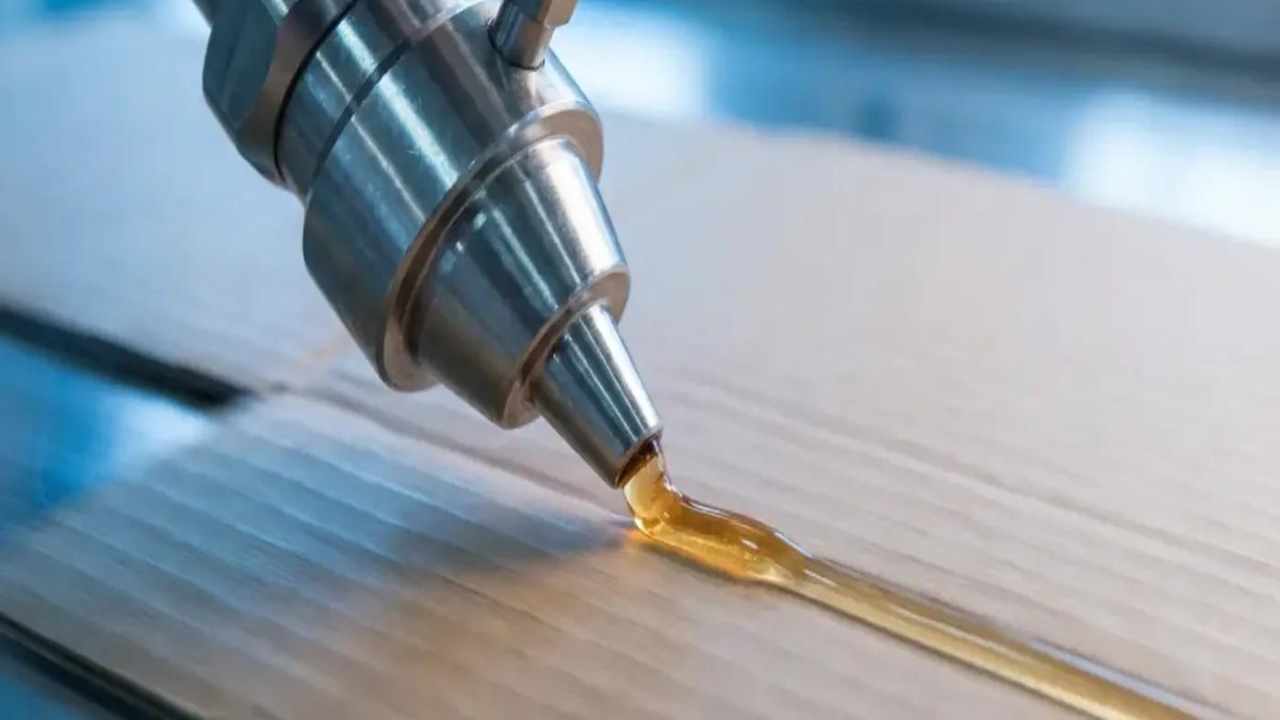
Reactive hot melt adhesives can develop enough initial strength to hold an assembly together within seconds, creating the impression that the bonding process is complete. Yet the adhesive may still be undergoing chemical changes that determine whether the joint survives thermal exposure, mechanical stress, humidity or long-term service.
This distinction is particularly important in moisture-curing polyurethane reactive hot melts, where cooling and solidification establish initial bond strength while subsequent reactions develop the final polymer structure. A formulation may demonstrate excellent green strength but develop inadequate ultimate adhesion, excessive stiffness or inconsistent durability.
The challenge is that properties responsible for rapid setting do not necessarily favor complete curing. Polyol crystallinity, molecular weight, isocyanate functionality, catalyst selection and adhesive-layer thickness can influence both processes, sometimes in opposing directions.
For formulators and production engineers, evaluating the initial bond without understanding the subsequent chemical reactions can therefore create a misleading picture of adhesive performance.
1. The Difference Between Setting and Curing Changes Everything
Conventional thermoplastic hot melts develop strength primarily through cooling and physical solidification. Reactive hot melts introduce an additional chemical process that changes the adhesive after application.
In a typical polyurethane reactive hot melt, an isocyanate-terminated prepolymer is applied in molten form. Cooling increases physical cohesion through solidification and, where applicable, crystallization of polymer segments. The resulting green strength permits the assembly to be handled before the adhesive reaches its final properties.
Residual isocyanate groups subsequently react with moisture from the surrounding atmosphere or substrates. These reactions can produce amine intermediates and urea linkages, contributing to molecular-weight growth and network development. Carbon dioxide is also generated during the reaction of isocyanate groups with water.
The timing of these processes matters. Strong initial crystallization may improve handling strength, but highly crystalline domains can also influence moisture transport and the development of the final bond.
Published research on crystalline structures in isocyanate-reactive hot melts has demonstrated that greater crystallinity can improve green strength while slowing subsequent adhesion development because moisture diffusion becomes more restricted.
This creates an important formulation trade-off. Increasing initial strength is not automatically equivalent to improving the complete bonding process.
2. Not Every Reactive Hot Melt Uses the Same Chemistry
Polyurethane systems are widely used in reactive hot melt applications, but they are not the only available chemistry.
Different reactive technologies offer opportunities to balance application behavior, cure mechanisms and end-use performance. Their selection depends on substrate requirements, production conditions, environmental exposure and the intended mechanical properties.
Moisture-curing polyurethane systems use reactive isocyanate functionality to develop properties after cooling. Epoxy-based reactive hot melts may employ latent curing agents activated by heat. Suitable acrylic systems may use polymerizable functional groups, while certain silane-modified systems undergo moisture-triggered hydrolysis and condensation.
These chemistries cannot be treated as interchangeable simply because they are applied from a heated state.
A thermally activated epoxy adhesive, for example, may require a defined heating schedule to achieve its intended conversion. A moisture-curing polyurethane formulation instead depends strongly on moisture availability, reactive-group concentration and diffusion through the adhesive layer.
Consequently, the correct chemistry must be selected before attempting detailed adjustments to viscosity, setting time or final strength.
The first question is not which formulation provides the highest laboratory bond strength. It is which curing mechanism is compatible with the actual assembly process and operating environment.
3. Raw Material Selection Controls More Than Melt Viscosity
The chemical architecture of polyurethane reactive hot melts is strongly influenced by the polyols and isocyanates used to manufacture the prepolymer.
Polyester polyols can contribute cohesive strength, adhesion and useful thermal properties. Crystalline polyester segments may promote rapid setting, while amorphous polyester components can modify flexibility, wetting behavior and open time.
Polyether polyols commonly provide flexibility and generally offer better resistance to hydrolytic degradation than susceptible polyester structures. However, their influence on green strength, adhesion and thermal properties depends on molecular weight and the complete formulation.
Polycarbonate polyols represent another design option. Research has investigated their use in reactive hot melts to modify mechanical performance, hydrolytic resistance and initial bonding behavior.
The isocyanate-to-hydroxyl ratio affects prepolymer molecular weight and the concentration of residual isocyanate groups, commonly reported as NCO content. Both influence viscosity, moisture reactivity and the development of the cured network.
Increasing reactive-group availability may provide additional curing potential, but it can also influence moisture sensitivity, reaction behavior and occupational exposure considerations.
Catalysts, thermoplastic modifiers, tackifying components and fillers add further complexity. A material introduced to improve green strength or processing can alter phase compatibility, viscosity stability or cured flexibility.
Raw materials should therefore be assessed as interacting components rather than independent contributors to individual specification values.
4. Open Time and Application Temperature Are Closely Connected
Open time is often treated as a fixed formulation property. In production, however, it is affected by the thermal history of the adhesive, the substrates and the application equipment.
A higher application temperature may reduce melt viscosity and improve spreading, but it also changes cooling behavior and can increase the potential for thermal degradation or unwanted reactions during prolonged heating.
Conversely, low substrate temperatures may accelerate solidification before adequate wetting occurs. The adhesive can appear to have set successfully while maintaining a poorly developed interface.
Application weight and adhesive-layer thickness create additional variations. A thick bead and a thin coating of the same formulation do not necessarily cool, wet or cure at comparable rates.
Equipment residence time must also be considered. Material held at elevated temperature for extended periods may undergo changes in viscosity or chemical composition, particularly if moisture enters the system.
For production qualification, a single laboratory viscosity measurement is rarely sufficient. More useful information comes from examining viscosity across the intended processing-temperature range, observing its stability during realistic heated residence times and checking open time under actual assembly conditions.
These measurements help establish an operating window that accommodates normal manufacturing variation without sacrificing bond quality.
5. Moisture Can Be Necessary for Curing and Harmful During Processing
Moisture plays two very different roles in polyurethane reactive hot melt technology.
After application, controlled exposure to moisture enables the chemical reactions responsible for developing final properties. Before application, unintended moisture exposure can compromise storage stability or trigger premature reactions inside processing equipment.
Premature reaction may increase viscosity, produce partially gelled material or generate carbon dioxide. Gas formation can contribute to voids and bubbles, particularly where moisture is excessive or the adhesive becomes too viscous for gases to escape.
Moisture availability also affects curing uniformity. A thin adhesive layer between moisture-permeable substrates can behave differently from a thick bondline enclosed between relatively impermeable materials.
High ambient humidity does not necessarily guarantee rapid, uniform curing throughout every adhesive joint. Moisture still needs to reach reactive regions of the material, and diffusion may become increasingly important as the structure develops.
This is why moisture control should be approached in two stages: preventing unwanted exposure during storage and heated processing, then establishing appropriate conditions for post-application curing.
Sealed packaging, dry handling systems and suitable equipment practices help protect moisture-sensitive formulations. Controlled conditioning and realistic substrate combinations are equally important when assessing final bond development.
6. Common Processing Defects Often Have Multiple Causes
Visible adhesive defects can provide useful diagnostic evidence, but a particular symptom does not always identify a single chemical cause.
Stringing during dispensing may reflect an unfavorable combination of melt viscosity, extensional behavior, nozzle geometry, temperature and dispensing dynamics.
Bubbles may originate from moisture reactions, trapped air, substrate outgassing or process conditions. Reducing adhesive viscosity might improve gas release without addressing the original cause.
Inconsistent final strength can arise from inadequate wetting, surface contamination, incomplete curing, changes in reactive-group availability or excessive adhesive-layer thickness.
Brittle bonds may reflect the balance between flexible and rigid polymer segments, network development, crystallinity or environmental aging.
A useful investigation separates formulation-related causes from application and curing conditions.
Observed problem | Technical factors worth investigating |
|---|---|
Weak initial bond | Wetting, cooling rate, crystallinity and cohesive strength |
Short or inconsistent open time | Temperature history, substrate temperature and setting behavior |
Stringing during application | Melt rheology, nozzle conditions and dispensing parameters |
Bubbles or internal voids | Moisture contamination, trapped gases and substrate outgassing |
Slow development of final strength | Moisture access, bondline thickness and reaction kinetics |
Brittle or poorly durable bond | Polymer architecture, network formation and environmental exposure |
These are diagnostic starting points rather than universal failure explanations.
A controlled troubleshooting program should change one relevant variable at a time while maintaining consistent substrates, application weight, curing conditions and test procedures.
7. The Final Bond Must Be Tested Under the Conditions That Matter
A reactive hot melt adhesive should be qualified across its complete performance development, not simply at the point when an assembly first becomes handleable.
Testing at defined intervals can distinguish initial green strength from the progression of final bonding properties. Depending on the application, useful measurements include lap-shear strength, peel resistance, creep behavior, thermal performance and environmental aging.
ISO 4587 provides a method for determining tensile lap-shear strength in rigid-to-rigid bonded assemblies. ASTM D1876 addresses T-peel resistance for suitable flexible adherends, while ASTM D3236 covers apparent viscosity measurement for hot melt adhesives and coating materials.
Failure-surface examination is especially valuable. ISO 10365 provides standardized terminology for describing failure patterns in bonded assemblies, helping investigators distinguish adhesive failure, cohesive failure and substrate-related behavior.
An apparently high strength value is less informative without considering where and how the joint failed.
Testing should also reflect end-use exposure. Thermal cycling, humidity conditioning, sustained loading and chemical contact can reveal weaknesses that are not apparent in short-term room-temperature measurements.
Regulatory and occupational safety requirements must be included in material selection. In the European Union, REACH Annex XVII Entry 74 requires appropriate training for industrial or professional users of covered diisocyanate-containing substances or mixtures where the combined diisocyanate concentration is at least 0.1% by weight, subject to the specified conditions. These requirements have applied since August 24, 2023.
The objective is to understand how adhesive chemistry, processing conditions and curing behavior collectively influence the final assembly. A reliable formulation is one that maintains acceptable performance across the conditions in which it will actually be manufactured and used.
That understanding becomes especially important when developing new adhesive systems, introducing alternative raw materials or transferring a formulation into an industrial production environment.
ONLYTRAININGS | ADVANCED TECHNICAL TRAINING
Reactive Hot Melt Adhesives – Formulation Strategies & Raw Material Selection
Move beyond initial bond-strength measurements and develop a more complete understanding of reactive hot melt formulation, curing behavior and industrial application performance.
What this training covers
Compare polyurethane, epoxy, acrylic and silane-modified reactive hot melt technologies and their curing mechanisms.
Evaluate polyols, isocyanates, base polymers, catalysts, fillers and modifiers for targeted formulation performance.
Understand how green strength, open time, curing kinetics and final bond properties interact.
Troubleshoot stringing, bubble formation, slow curing, viscosity instability and inconsistent adhesion.
Define suitable application-temperature windows, moisture conditions and industrial handling practices.
Address storage stability, reactive-component safety, compliance considerations and practical industrial case studies.
Included with the training: Six-month access, a verifiable training certificate, downloadable materials, practical resources and 24/7 expert discussion forum access.
Technical References
Enhanced Green Strength in a Polycarbonate Polyol-Based Reactive Polyurethane Hot-Melt Adhesive. Polymers, 2024. Read the research
Crystalline Structure in Isocyanate Reactive Hot Melt Adhesives. Polymer Degradation and Stability, 2002. Research publication
Facile Synthesis of Polyester-Polyether Block Copolyols for the Sustainable High-Performance Polyurethane Reactive Hot Melt Adhesives. Reactive and Functional Polymers, 2024. Research publication
Novel Polyurethane Reactive Hot Melt Adhesives Based on Polycarbonate Polyols Derived from CO₂ for the Footwear Industry. International Journal of Adhesion and Adhesives. Research publication
Covestro — Hot Melt Adhesives Processing Technology. Industrial technical information on polyurethane hot melt raw materials and processing. Technical reference
ASTM D3236-15(2021). Standard Test Method for Apparent Viscosity of Hot Melt Adhesives and Coating Materials. ASTM standard
ISO 4587:2003. Adhesives — Determination of Tensile Lap-Shear Strength of Rigid-to-Rigid Bonded Assemblies. ISO standard
ASTM D1876-08(2023). Standard Test Method for Peel Resistance of Adhesives (T-Peel Test). ASTM standard
ISO 10365:2022. Adhesives — Designation of Main Failure Patterns. ISO standard
Commission Regulation (EU) 2020/1149. REACH Annex XVII restriction on diisocyanates. EUR-Lex